 September 11, 2026
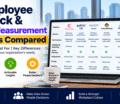
Employee survey and culture measurement tools Mumbai companies use can range from simple pulse surveys to structured organisational culture diagnostics. Inside Corporate Cultures goes beyond collecting employee responses by combining confidential feedback, 10 Culture Dimensions, Emotional Intelligence mapping and the Culture Quotient Score™ to help leadership understand what employees experience and what needs attention.
What are employee survey and culture measurement tools?
Employee survey and culture measurement tools Mumbai organisations use are structured systems for collecting, analysing and interpreting employee feedback about workplace experience, engagement and organisational culture.
A basic survey may tell you whether employees are satisfied.
A stronger culture measurement approach asks what is influencing that experience.
For example:
- Do employees trust leadership?
- Is communication working across teams?
- Do employees feel recognised?
- Can people raise concerns safely?
- Do managers support development?
- Are teams collaborating effectively?
- Do employees understand organisational goals?
- Are stated company values reflected in everyday behaviour?
Those questions matter because workplace culture isn’t something employees experience once a year when HR launches a survey.
They experience it every day.
The quality of a culture measurement system therefore depends not only on the questions asked, but also on how the findings are interpreted and converted into action.
Why do companies need more than a standard employee survey?
A standard employee survey can provide useful data, but data by itself doesn’t explain the whole story.
Imagine an organisation receives the following result:
Employee trust in leadership: 62%
Is 62% good?
Is it poor?
Which employees are driving the result?
What is causing it?
Is the issue communication, leadership behaviour, transparency, change fatigue or something else?
A number doesn’t answer those questions.
That’s why Inside Corporate Cultures focuses on moving from employee voice to culture intelligence. Its ICC VOICE™ framework combines employee feedback with 10 Culture Dimensions, Emotional Intelligence mapping and the proprietary Culture Quotient Score™.
The survey is the listening mechanism. The culture assessment is the interpretation layer.
That distinction can make the findings considerably more useful for leadership.
What do corporate culture diagnostic tools for companies in Mumbai measure?
Corporate culture diagnostic tools for companies in Mumbai can measure different aspects of organisational life depending on the framework being used.
Common measurement areas include:
Culture area | What organisations can explore |
Leadership | Trust, leadership behaviour and decision-making |
Communication | Information flow and transparency |
Collaboration | Cross-functional teamwork and cooperation |
Recognition | Whether contributions are noticed and valued |
Growth | Learning, development and career opportunities |
Accountability | Ownership and responsibility |
Employee experience | How employees experience everyday work |
Engagement | Connection, motivation and commitment |
Values | Whether stated values are reflected in behaviour |
Workplace climate | The broader environment employees experience |
There isn’t one universal culture questionnaire that is right for every organisation.
Established frameworks demonstrate this clearly.
OCAI, for example, uses the Competing Values Framework and compares current and preferred culture.
Human Synergistics’ OCI focuses on behavioural norms employees perceive as expected within the organisation.
OCTAPACE looks at dimensions such as openness, confrontation, trust, authenticity, proactivity, autonomy, collaboration and experimentation.
The choice should therefore begin with the business question, not with whichever survey happens to have the longest questionnaire.
How does an enterprise workplace culture assessment work?
A useful enterprise assessment should follow a structured process from business context to employee feedback and leadership action.
1. Define what leadership needs to understand
We begin with the organisational question.
Is the company experiencing declining engagement?
Is there a leadership transition?
Has the organisation grown quickly?
Are teams working in silos?
Has there been a merger, restructuring or major strategic change?
The assessment should be designed around the actual issue.
2. Establish the assessment scope
The survey population can be defined by organisation, location, department, business unit, level or other relevant employee groups.
For enterprise organisations, segmentation can be particularly useful because an overall score can hide important differences between teams.
3. Capture confidential employee feedback
Employees need a safe mechanism for sharing their workplace experience.
ICC’s approach is designed around confidential feedback, with findings presented as aggregated organisational insights rather than individual employee evaluations.
4. Analyse the responses
The collected feedback is assessed across the selected culture dimensions.
Patterns can then be examined to identify strengths, opportunities and areas requiring deeper attention.
5. Add behavioural context
ICC VOICE™ incorporates Emotional Intelligence mapping as an additional layer alongside employee feedback.
This helps move the conversation beyond:
“What score did we receive?”
towards:
“What behavioural patterns may be influencing this experience?”
6. Create the Culture Quotient Score™
The Culture Quotient Score™ provides a consolidated culture measurement within the ICC VOICE™ framework, alongside dimension-level findings and benchmark context.
7. Conduct the leadership debrief
The report should not simply be emailed to HR.
Leadership needs to understand the findings in the context of the organisation.
8. Identify action priorities
The objective is not to create 25 new HR initiatives.
The objective is to identify the areas where focused action can make the greatest difference.
9. Re-measure
Culture measurement becomes more useful when organisations can compare findings over time.
The ICC approach follows an Assess → Understand → Improve → Re-measure cycle.
How do employee survey tools compare with culture assessment solutions?
The biggest difference is usually the level of interpretation and support around the survey.
Option | Best suited for | Typical output |
Basic survey software | Quick feedback collection | Survey results |
Pulse survey platform | Frequent employee check-ins | Trend and pulse data |
Engagement survey platform | Measuring employee engagement | Engagement dashboards |
Culture diagnostic tool | Understanding organisational culture | Culture profile |
Consulting-led assessment | Diagnosis plus interpretation | Assessment + recommendations |
ICC VOICE™ | Employee voice + culture intelligence | Culture insights + CQS™ + action priorities |
Eminent Consultants, for example, positions its Mumbai employee survey service around tailor-made surveys, more than 24 parameters, three-dimensional analysis and action planning.
Gallup Access combines employee surveys, validated engagement questions, analytics, benchmarking and action-planning resources.
CultureMonkey, Qualtrics XM, Culture Amp and Workday Peakon are also part of the wider employee-engagement technology landscape. Current 2026 comparisons show meaningful differences in their target segments, integrations, analytics and survey capabilities.
So the real question isn’t:
“Which tool has the most features?”
It’s:
“What do we need the assessment to help us decide?”
What makes ICC VOICE™ different from a conventional culture survey?
ICC VOICE™ is designed as a workplace culture intelligence framework rather than simply a questionnaire.
It brings together three layers:
Employee Voice
What are employees experiencing?
EI Insights
What behavioural and emotional patterns may be influencing that experience?
Culture Quotient Score™
What does the overall culture picture look like?
ICC describes these as the three core layers of its framework.
This creates a more useful leadership conversation.
Instead of saying:
“Communication scored 68%.”
Leadership can explore:
What is happening with communication, where is it happening, which employee groups experience it differently, and what leadership behaviour may be contributing to it?
That’s a much more actionable conversation.
What is the biggest mistake companies make when measuring culture?
The biggest mistake is treating the survey report as the destination.
A report can identify a problem.
It cannot change the organisation.
Consider a hypothetical enterprise with a low score for recognition.
The obvious response might be to launch an employee rewards programme.
But what if the deeper issue is that managers don’t provide regular feedback?
The company could spend money on a new rewards system without addressing the behaviour employees actually experience.
The lowest score isn’t automatically the highest-priority intervention.
The more useful approach is to look for relationships between findings.
For example:
Low trust → limited feedback → weak communication → lower engagement
Those may appear as four separate survey findings.
They may actually be connected.
That is one of the reasons culture diagnosis should involve interpretation rather than simply producing a dashboard.
What should Mumbai companies look for in a culture measurement tool?
Before selecting an assessment solution, HR and leadership teams should examine these areas:
- Question quality: Are the questions relevant to your organisational objectives?
- Customisation: Can the assessment reflect your workplace rather than forcing a generic template?
- Confidentiality: Can employees provide honest feedback safely?
- Segmentation: Can leadership identify meaningful differences across teams or employee groups?
- Culture dimensions: Does the framework measure more than basic satisfaction?
- Analytics: Are results easy to interpret?
- Benchmarking: Can findings be understood against relevant comparison points?
- Action planning: Does the provider help translate findings into priorities?
- Follow-up: Can progress be measured later?
- Consulting support: Is there expert interpretation when leadership needs it?
A good measurement system should make decision-making easier, not simply produce more data.
What does an enterprise culture assessment report include?
The final deliverables depend on the assessment scope, but a structured culture assessment can include:
- Executive summary
- Overall culture measurement
- Dimension-level scores
- Employee engagement insights
- Key cultural strengths
- Priority opportunities
- Relevant employee-group comparisons
- Emotional Intelligence insights where applicable
- Leadership interpretation
- Recommended action priorities
- Follow-up measurement recommendations
ICC VOICE™ specifically describes its leadership deliverables as including a culture assessment report, Culture Quotient Score™, EI mapping, leadership debrief and action priorities.
What is the original ICC insight behind workplace culture measurement?
One practical insight from ICC’s own positioning is that culture visibility matters before culture transformation.
Its founders describe seeing organisations invest in recruitment, training and technology while still struggling with disengagement, attrition, communication and trust. ICC was created around the idea that leaders need reliable insight into how employees actually experience the workplace, rather than relying only on annual surveys and assumptions.
That leads to a simple principle:
Don’t ask employees for feedback unless you’re prepared to understand what it means.
And don’t measure culture simply because you can produce a score.
Measure it because leadership is prepared to use the insight.
Who should use enterprise workplace culture assessment tools?
These solutions can be useful for:
- CEOs and founders
- CHROs
- HR directors
- People & Culture teams
- Organisational development teams
- Employee experience leaders
- L&D leaders
- Business-unit heads
- Leadership teams managing transformation
- Growing companies establishing a culture baseline
You don’t need to wait until employee engagement has visibly declined.
A baseline can help leadership understand where the organisation stands before a major transformation, expansion or leadership change.
Frequently asked questions
What are employee survey and culture measurement tools?
Employee survey and culture measurement tools help organisations collect and analyse employee feedback about engagement, workplace experience and organisational culture. Depending on the framework, they can also identify behavioural patterns, culture gaps and areas for leadership action.
Which employee survey and culture measurement tools are available in Mumbai?
Mumbai organisations can choose from consulting-led survey providers, employee engagement platforms and established culture diagnostic frameworks. Options in the broader market include Eminent Consultants, Gallup Access, OCAI, Human Synergistics OCI, OCTAPACE-based assessments and other employee experience platforms.
What are corporate culture diagnostic tools for companies in Mumbai?
Corporate culture diagnostic tools are structured assessment frameworks used to understand workplace behaviours, values, employee perceptions and organisational culture. Different tools measure different dimensions, so the appropriate choice depends on the business question and desired outcome.
How is a culture assessment different from an employee engagement survey?
An engagement survey primarily examines employee engagement and related workplace experiences. A culture assessment can take a broader view of behaviours, leadership, communication, trust, collaboration, values and organisational patterns.
Can an enterprise culture survey be customised?
Yes. Enterprise assessments can be structured around the organisation’s objectives, employee population, business units and culture priorities. Customisation is useful when leadership wants to investigate a particular organisational challenge rather than rely entirely on a generic questionnaire.
How often should companies measure workplace culture?
There is no universal schedule. Many organisations combine a broader culture assessment with shorter pulse measurements when they need to monitor progress after an intervention, leadership change, restructuring or other significant workplace event.
Ready to measure the culture your employees actually experience?
If you’re comparing employee survey and culture measurement tools Mumbai, don’t start by choosing the biggest dashboard or the longest questionnaire.
Start with the business question.
What do you need to understand about your employees that you cannot currently see?
Inside Corporate Cultures can help turn that question into a structured workplace culture assessment through ICC VOICE™, confidential employee feedback, culture dimensions, EI insights and the Culture Quotient Score™.
Talk to Inside Corporate Cultures about an enterprise workplace culture assessment for your organisation in Mumbai.